The Most Influential Cannabis Genetics of the Last 30 Years
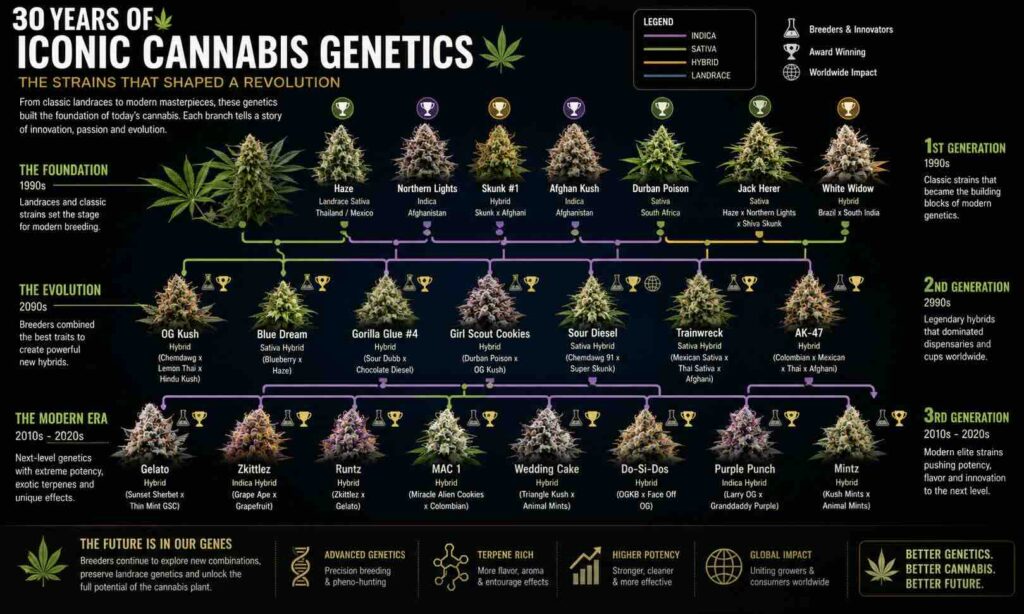
The cannabis industry has changed dramatically over the last three decades, and much of that transformation can be traced back to genetics. As a breeder, I have witnessed how certain genetic lines have influenced entire generations of cultivars, shaping the direction of modern breeding projects and cultivation practices. While cultivation techniques, lighting technologies, and environmental controls have evolved significantly, genetics remain the foundation upon which every successful cannabis plant is built.
The most influential cannabis genetics are not necessarily those that became the most famous. Instead, they are the lines that contributed valuable traits, inspired future breeding projects, and helped establish new standards for quality, consistency, and performance. Many modern cultivars carry genetic influences that can be traced back to breeding decisions made decades ago.
The Importance of Foundational Genetics
Before examining influential genetic lines, it is important to understand why certain cultivars become so important to breeders. A truly influential genetic line contributes characteristics that remain valuable across multiple generations of breeding work.
As a breeder, I look for traits such as stability, vigor, adaptability, structure, resin production, and overall consistency. When a genetic line repeatedly passes desirable characteristics to its offspring, it becomes a valuable tool for future breeding projects.
Some genetics become influential because they solve cultivation challenges, while others introduce entirely new possibilities. In many cases, their greatest contribution is their ability to improve future generations.
The Rise of Modern Breeding Programs
The last thirty years have seen tremendous growth in cannabis breeding. Early breeders often worked with limited resources compared to those available today. Despite these limitations, they created genetic foundations that continue influencing modern cultivars.
Selective breeding became increasingly sophisticated as breeders learned more about inheritance patterns and cultivar stabilization. This allowed them to refine desirable traits while reducing variability.
As a breeder, I have tremendous respect for the pioneers who established many of the breeding principles still used today. Their work helped transform cannabis breeding from a largely experimental activity into a more structured discipline.
Their influence can still be seen throughout the modern cannabis landscape.
Genetics That Shaped Modern Cultivation
Certain genetic lines gained importance because they offered combinations of traits that growers found highly valuable. Some contributed improved vigor and resilience, while others became known for consistency, adaptability, or distinctive breeding potential.
Over time, these genetics were incorporated into countless breeding projects, allowing their influence to spread throughout the cannabis industry. Many modern cultivars contain genetic contributions from multiple influential lineages developed during the last three decades.
Growers interested in exploring contemporary cannabis genetics can learn more through Ministry of Cannabis. Understanding breeding history helps cultivators appreciate the role genetics play in modern cultivation.
As a breeder, I believe the true measure of influence is longevity. Genetics that continue contributing value decades later have earned their place in cannabis history.
The Role of Preservation and Innovation
Influential genetics are valuable not only because of what they achieved in the past but also because of what they make possible in the future. Preserving important genetic resources allows breeders to continue building upon successful foundations.
Innovation depends on access to diverse breeding material. Without preservation, future breeders may lose access to traits that could prove valuable in new cultivation environments or breeding objectives.
As a breeder, I see preservation and innovation as complementary goals rather than competing priorities. The strongest breeding programs respect genetic heritage while continuing to explore new possibilities.
This balance remains essential for long-term progress.
The Future Influence of Cannabis Genetics
The next generation of influential genetics will likely emerge through a combination of traditional breeding and modern scientific tools. Advances in plant science, cultivation technology, and genetic analysis continue providing breeders with new opportunities.
Future cultivars may become influential because of their adaptability, consistency, or unique combinations of characteristics. Regardless of which traits become most important, genetics will remain the driving force behind cannabis innovation.
As a breeder, I am optimistic about the future. The industry now possesses more knowledge and resources than ever before, creating opportunities for continued improvement and discovery.
The genetics developed today may become the foundations of tomorrow’s most influential cultivars.
Final Thoughts
The most influential cannabis genetics of the last thirty years helped shape modern cultivation by contributing valuable traits, inspiring innovation, and providing foundations for future breeding work. Their impact extends far beyond individual cultivars and continues influencing the industry today.
Readers interested in cannabis developments in France can explore additional information through https://lecannabiste.com/category/france/.
As a breeder, I believe the greatest genetics are those that continue creating opportunities for future generations. Their influence lives on through the countless cultivars they helped inspire and the breeders who continue building upon their legacy.